Architecting the Architect Career

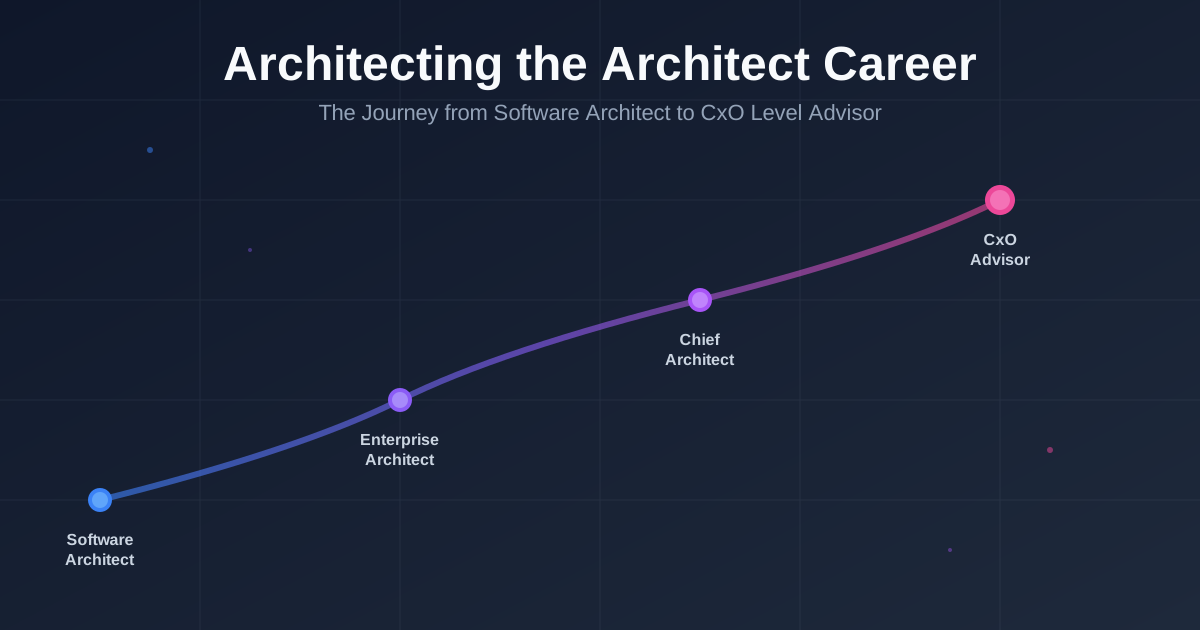
A roadmap from solution architect to executive and CxO-level advisor
Technology careers often grow organically—from engineer to senior engineer, from senior engineer to architect. But careers that evolve into executive-level or CxO advisory roles are rarely accidental. Just as we intentionally design enterprise systems, architects must intentionally architect their own careers to expand scope, influence, and strategic impact.
This article is written for junior and mid-career architects who aspire to move beyond project delivery and system design into enterprise leadership, strategic decision-making, and trusted advisory roles at the executive level. The goal is not a title, but the ability to shape direction, guide outcomes, and influence organizations at scale.
From Designing Systems to Shaping Enterprises
Early-career architects focus on systems—applications, integrations, data flows, and infrastructure. As careers mature, the focus must shift from how systems are built to how enterprises operate and evolve.
The mindset progression looks like this:
- Junior architects design solutions
- Senior architects design platforms and ecosystems
- Enterprise architects align technology with business strategy
- Executive-level advisors influence decisions, priorities, and operating models
Recognizing this shift early helps architects invest in the right experiences at the right time.
Understanding the Architecture Role Landscape
Architecture is not a single role but a spectrum of responsibilities. Understanding these roles allows architects to build breadth while developing depth.
Solution Architect
Designs end-to-end solutions for specific business problems, balancing functional and non-functional requirements.
Key focus areas:
- System and integration design
- Cloud and application patterns
- Translating business needs into technical solutions
- Stakeholder communication
This role builds the foundation for all architecture careers.
Technical / Platform Architect
Owns deep technical domains such as cloud platforms, data platforms, or core enterprise services.
Key focus areas:
- Scalability, reliability, and performance
- Platform and reference architecture design
- Developer experience and enablement
This role establishes technical credibility and depth.
Domain Architect
Specializes in a specific industry or business domain such as retail, QSR, healthcare, logistics, or finance.
Key focus areas:
- Domain workflows and KPIs
- Regulatory and operational constraints
- Technology decisions tied to business outcomes
Domain expertise is a critical differentiator for executive advisory roles.
Enterprise Architect
Operates at a strategic level, aligning technology investments with business goals across portfolios and programs.
Key focus areas:
- Capability modeling and roadmaps
- Technology standards and governance
- Cross-program alignment
- Business–IT strategy integration
Enterprise architects influence direction rather than execution.
Data, AI, and Cloud Architecture Specialists
These roles cut across solution and enterprise architecture and are increasingly central to executive discussions.
Key focus areas:
- Data and analytics strategy
- AI/ML architecture and governance
- Cloud operating models and cost optimization
- Security, compliance, and risk
These capabilities are essential for modern executive-level advisory conversations.
Moving from Delivery to Influence
One of the most important career transitions for architects is moving from delivery ownership to organizational influence.
The questions change:
- How do we design this system?
- How should teams design systems across the enterprise?
- Which investments matter most, and why?
To make this shift, architects must:
- Participate in roadmap and strategy discussions
- Influence architectural standards and long-term direction
- Mentor architects and senior engineers
- Communicate trade-offs in business language
Influence is built through consistent, high-quality judgment at scale.
Business and Financial Thinking for Architects
Architects aspiring to executive-level advisory roles must expand beyond technology into business and financial reasoning.
Key areas to develop include:
- Cost models and cloud economics
- ROI and investment prioritization
- Risk, compliance, and resilience trade-offs
- Vendor strategy and commercial considerations
Executive stakeholders trust architects who understand why a decision makes business sense, not just why it is technically sound.
The Role of the Executive-Level Architecture Advisor
An executive or CxO-level advisor is not responsible for day-to-day execution. Instead, they provide clarity, direction, and confidence to leadership teams.
Typical responsibilities include:
- Assessing technology strategy and maturity
- Advising on large-scale transformations
- Guiding platform and operating model decisions
- Helping leaders navigate trade-offs between speed, cost, and risk
- Translating emerging technologies into business relevance
These roles demand breadth, judgment, and strong communication—not just technical excellence.
Building Advisory Readiness Intentionally
Becoming an executive-level advisor is a gradual evolution. Architects can prepare by:
- Expanding scope across multiple programs and domains
- Writing, speaking, and sharing architectural thinking
- Building frameworks rather than one-off solutions
- Developing a calm, trusted advisory presence
- Learning to say “it depends”—and explaining why
Your credibility grows when leaders seek your perspective before decisions are made.
Final Thought
The future of architecture careers lies beyond diagrams and systems. It lies in helping organizations make better decisions through technology insight.
Architects who intentionally grow from solution design to enterprise thinking and executive advisory impact will shape not just systems—but strategies, organizations, and outcomes.